AFK Journey has settled into a comfortable rhythm by 2026: it is still LilithGames’ open-world AFK RPG sequel to AFK Arena, still free-to-play on Google Play and iOS App Store, and still a game where small decisions compound like interest in a very patient bank account. Newcomers often blast through early chapters, see AFK Stage 200 on the horizon, and then hit a wall that feels less like a difficulty spike and more like a locked door with a dozen keys scattered around the map. The good news is that the door is rarely about raw power alone. It is about team shape, daily habits, gear priorities, artifact timing, stage pushes, and resource discipline. The tips below are the practical sort that help a player stop spinning the wheels and start moving the needle.

Build a team that behaves like a band, not a box of soloists
A common mistake is treating five strong heroes as a team. AFK Journey rewards complementarity: a tank who buys time, a healer who keeps the line upright, a controller who interrupts the rhythm, and damage dealers who exploit the opening. The original tips stress observing how well heroes work together, and that is the right instinct. A lineup is less a pile of stat sticks and more a jazz quartet: each member needs to know when to solo and when to support. Because enemy compositions change, players should expect to reconfigure often. A balanced core also leaves room for deeper customization, so experimentation does not become chaos.
Turn daily quests into a quiet ritual
Idle games are built on routine, and AFK Journey is no exception. Its questing system is more vivid than many peers and its rewards are generous, but generosity only helps if players actually collect it. Daily tasks and in-game events should be reviewed on a regular schedule. These missions supply materials, incentives, and faster progression. The habit matters more than the burst: ten focused minutes each day can outperform a frantic weekend scramble. Treat the daily list like brushing teeth for the account, not like a chore to postpone until the plaque becomes a problem.
Gear first, then hero upgrades when the math favors it
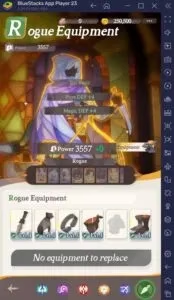
Hero upgrades are important, but equipment upgrades can lift several heroes at once. That makes gear a high-leverage priority. Players should give heroes the best equipment available and concentrate on acquiring and producing high-quality gear. The original advice is blunt: enhancements to gear make a big difference in battle effectiveness, and staying competitive depends on it. A useful mental model is a restaurant kitchen. Buying one excellent knife improves every dish the chef prepares; upgrading one hero’s level helps that hero, but upgrading shared gear can sharpen the whole menu.
Buy the Astral Tome early and let it work
The Astral Tome is an adaptable artifact worth early attention. It offers a Haste bonus for Battle Drill, crowd control through ATK Speed Reduction in Campaign fights, and respectable damage output. That flexibility makes it a sensible first investment rather than a niche toy. Over time, players can improve it or replace it with something better, but waiting too long leaves value on the table. In a game where tempo decides fights, a little Haste is like oil in a hinge: it does not look dramatic, yet everything moves more smoothly.
Push AFK stages before wandering too far
The first major focus should be clearing AFK stages. Each cleared stage opens more modes and increases passive income from Gold, Experience, and Essence. After a few stages, players receive an invitation letter, diamonds for more character pulls, and equipment boxes that strengthen the roster. That creates a loop: push stages, collect rewards, improve heroes, unlock modes, then push again. Arena, Dream Realm, Labyrinth, and Legend Trial all feed extra benefits back into the AFK stage climb. The cycle continues until the player is temporarily stuck everywhere for the day, and that is a natural stopping point rather than a failure.
Spend diamonds like a careful quartermaster
Resource discipline is central in idle games. Diamonds are premium currency, and single pulls on the All-recruitment banner are a common trap. A 10-pull saves 300 Diamonds, so hoarding toward that threshold is the smarter play. The same caution applies to Temporal Essence and Twilight Essence, which upgrade EX weapons. Players who are not ranking highly should be especially careful. Some characters only need a specific investment in their Exclusive Weapon, such as +5, +10, or sometimes +0, and anything beyond that can be wasted. This is not stinginess; it is calibration. Spending essences without a plan is like seasoning a dish by upending every jar into the pot.
Play comfortably on a bigger screen
AFK Journey is a long-session game in short bursts, so comfort matters. Running it on PC through BlueStacks is a practical recommendation: it avoids battery drainage and supports smoother gameplay on a larger screen. That does not replace strategy, but it makes the routine more pleasant.
| Priority | Why it matters | Practical move |
|---|---|---|
| Team synergy | Fights hinge on complementary skills | Build a balanced core and adapt to enemies |
| Daily quests | Steady materials and event rewards | Review and finish them regularly |
| Equipment | Boosts multiple heroes | Upgrade quality gear before chasing marginal levels |
| Astral Tome | Flexible Haste and control | Buy early, improve later |
| AFK stages | Unlocks modes and passive income | Push until temporarily stuck |
| Diamonds | Premium pulls are expensive | Save for 10-pulls to save 300 |
| EX essences | Waste is easy | Invest only to needed breakpoints |
In 2026, AFK Journey still rewards players who think in systems rather than single clicks. The game is generous, but it is not careless. A strong team, a reliable daily loop, smart gear investment, an early Astral Tome, steady stage pushing, and disciplined spending all work together. Players who treat those pieces as one machine will find that progress feels less like luck and more like maintenance: quiet, repeatable, and surprisingly powerful.
Comments